The History of Lucknowi Chikankari: From Mughal Courts to Modern Fashion
The Timeless Story of India’s Most Elegant Hand Embroidery
Few textile traditions in the world carry the grace, refinement, and cultural richness of Lucknowi Chikankari. Delicate yet detailed, luxurious yet understated, Chikankari has remained one of India’s most admired forms of hand embroidery for centuries.
Today, handcrafted Chikan continues to be loved across generations — from traditional wardrobes to modern luxury fashion — and heritage brands like Tehzeeb continue to preserve this remarkable art through authentic handcrafted collections.
But where did Chikankari begin?
And how did it become one of the most celebrated embroidery traditions in India?
The Origins of Chikankari
The history of Chikankari is deeply connected with the cultural elegance of Lucknow and the royal sophistication of the Mughal era.
While historians debate its exact origin, many believe Chikankari flourished during the reign of Mughal Empress Noor Jahan, who was known for her love of fine textiles, embroidery, and artistic craftsmanship.
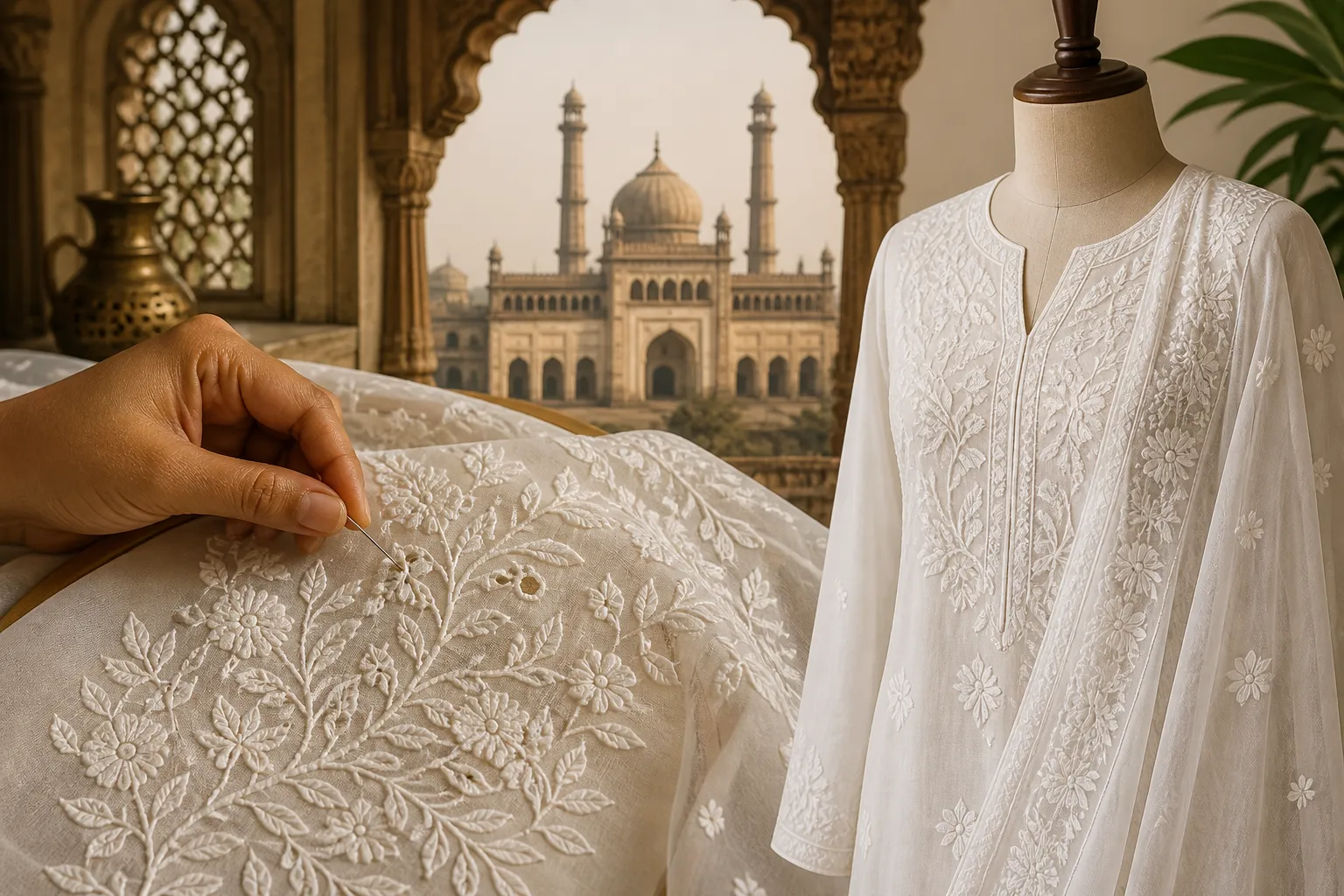
Lucknow — the city of Nawabs — became the natural home of this delicate art form. The culture of Awadh valued refinement, etiquette, poetry, fragrance, architecture, and graceful clothing. Chikankari perfectly reflected this aesthetic world.
The word “Chikan” is believed to derive from the Persian word “Chikeen” or “Chikin”, referring to delicate embroidered patterns.
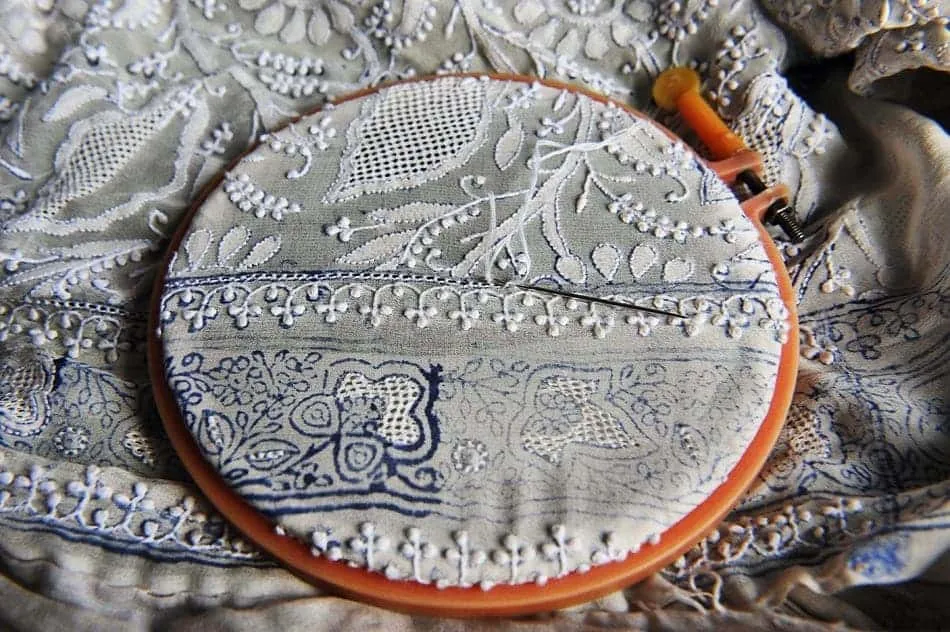
Over time, Chikankari evolved into a sophisticated embroidery tradition involving dozens of hand stitches, intricate floral motifs, and elegant shadow work.
The Art That Flourished Through Generations
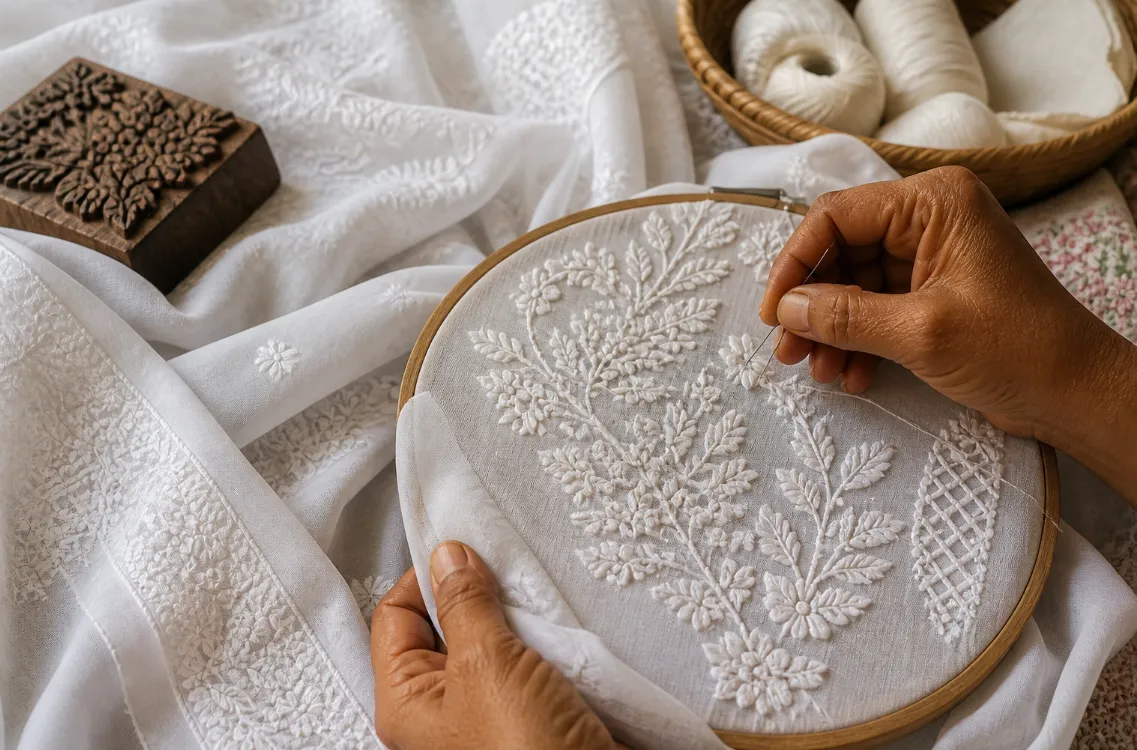
Unlike machine embroidery, authentic Lucknowi Chikan has always depended entirely on the skill of artisans.
For generations, families in and around Lucknow preserved this craft through hand training passed from mother to daughter and artisan to apprentice.
At the heart of authentic Chikankari lies patience.
A single handcrafted garment may take days, weeks, or even months to complete depending on the complexity of the embroidery. Master artisans create delicate textures using stitches such as:
-
Bakhiya (shadow work)
-
Murri
-
Phanda
-
Jaali
-
Tepchi
-
Ghaas Patti
-
Keel Kangan
Each stitch creates a different visual effect — some raised, some transparent, some shadow-like, and some floral.
This extraordinary craftsmanship is what continues to make handcrafted Chikan impossible to truly replicate by machine.
Chikankari and the Culture of Elegance
For centuries, Lucknowi Chikan symbolized sophistication and understated luxury.
Traditionally crafted on fine muslin and soft cotton fabrics, Chikankari garments became known for their comfort, breathability, and graceful appearance — especially in the warm climate of India.
The beauty of Chikankari lies in its subtlety.
Unlike heavily embellished fashion, authentic Chikan speaks softly through fine detail, delicate textures, and timeless elegance.
This is one of the reasons why Chikankari has remained relevant across generations and changing fashion trends.
From Royal Courts to Modern Fashion
Over the decades, Chikankari evolved from royal and traditional clothing into contemporary designer fashion.
Today, handcrafted Lucknowi Chikan appears on:
-
Kurtas
-
Sarees
-
Dupattas
-
Co-ord sets
-
Fusion wear
-
Occasion wear
-
Luxury ethnic collections
Modern designers now combine traditional stitches with fabrics like georgette, chiffon, crepe, silk, modal, organza, and tussar.
Yet despite changing silhouettes and styles, the essence of Chikankari remains unchanged:
handcrafted elegance.
At Tehzeeb, this balance between heritage and contemporary style has remained central since 1962 — preserving traditional craftsmanship while presenting it in refined modern forms.
Why Authentic Chikankari Still Matters Today
In today’s world of fast fashion and mass production, genuine handcrafted work has become increasingly rare.
Authentic Chikankari represents something deeper:
-
slow craftsmanship,
-
human artistry,
-
cultural heritage,
-
and timeless fashion.
Every handcrafted garment carries:
-
the patience of artisans,
-
the history of Lucknow,
-
and generations of inherited skill.
This emotional and artistic value is what separates authentic hand embroidery from machine-made imitation.
The Role of Heritage Brands Like Tehzeeb
For traditional crafts to survive, they must continue to be valued, worn, and preserved.
For over six decades, Tehzeeb has worked closely with skilled artisans from Lucknow to continue this artistic legacy through handcrafted Chikankari collections.
By combining traditional embroidery with elegant contemporary design, Tehzeeb continues to bring authentic Lucknowi Chikan to modern wardrobes while preserving the soul of the craft.
The Timeless Beauty of Lucknowi Chikan
Fashion trends may change.
Craftsmanship does not.
The beauty of Lucknowi Chikankari lies not only in its embroidery, but in what it represents:
heritage, patience, elegance, and human artistry.
From the royal courts of Awadh to modern luxury fashion, Chikankari continues to remain one of India’s most graceful and timeless textile traditions.
And through brands like Tehzeeb, this heritage continues — beautifully preserved by hand.