How to Identify Authentic Lucknowi Chikan
A Complete Guide to Recognizing Genuine Handcrafted Chikankari
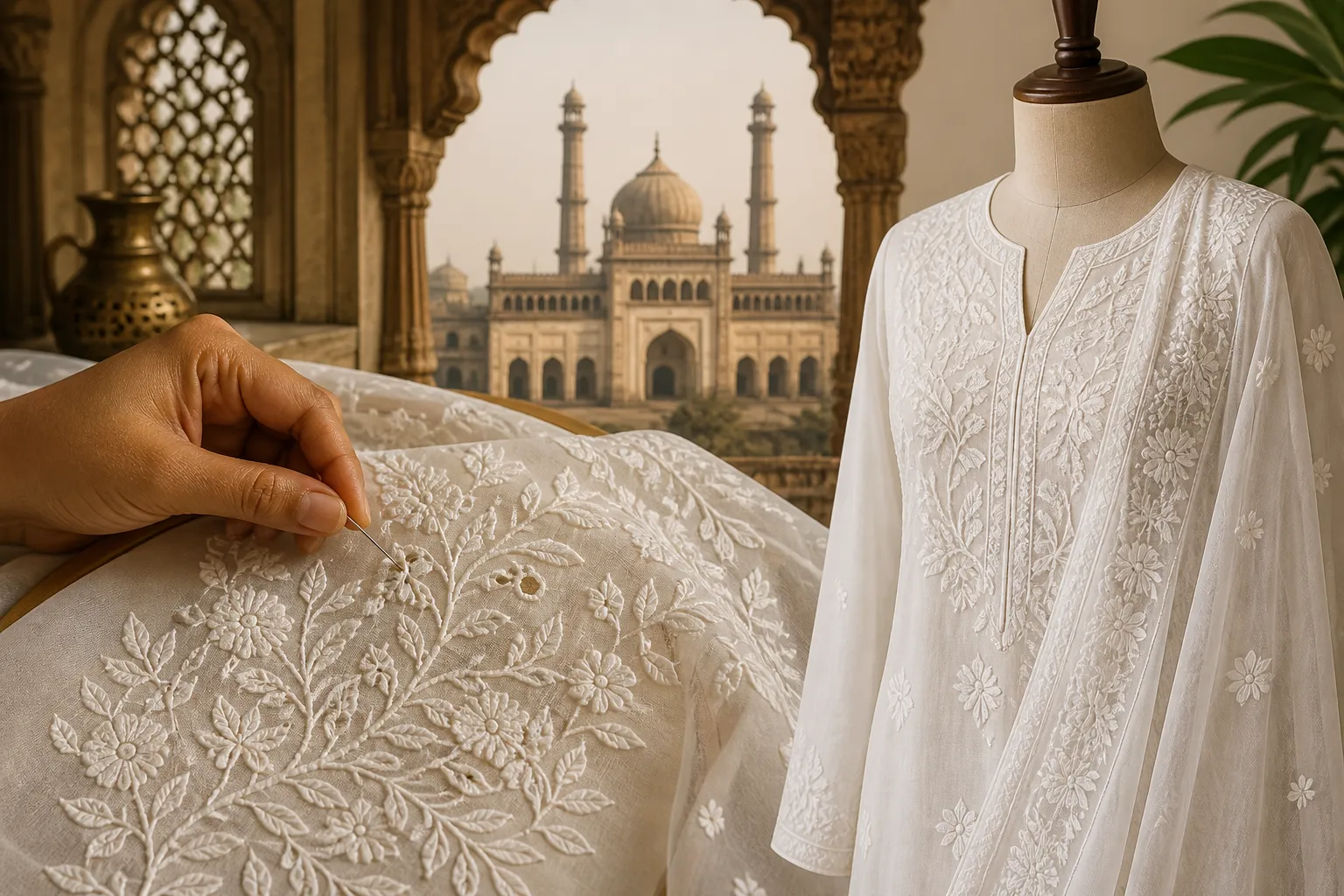
Lucknowi Chikankari is one of India’s most elegant and admired embroidery traditions. Its delicate stitches, soft textures, and timeless sophistication have made it beloved across generations.
But as the popularity of Chikankari has grown, machine-made imitations have also become increasingly common.
Today, many garments may appear similar to authentic Chikan at first glance — yet lack the craftsmanship, artistry, and heritage of true hand embroidery.
So how can you identify authentic handcrafted Lucknowi Chikan?
At Tehzeeb, preserving genuine hand embroidery has remained central since 1962. This guide will help you understand the key signs of authentic handcrafted Chikankari and how to distinguish it from machine-made alternatives.
1. Look Closely at the Stitches
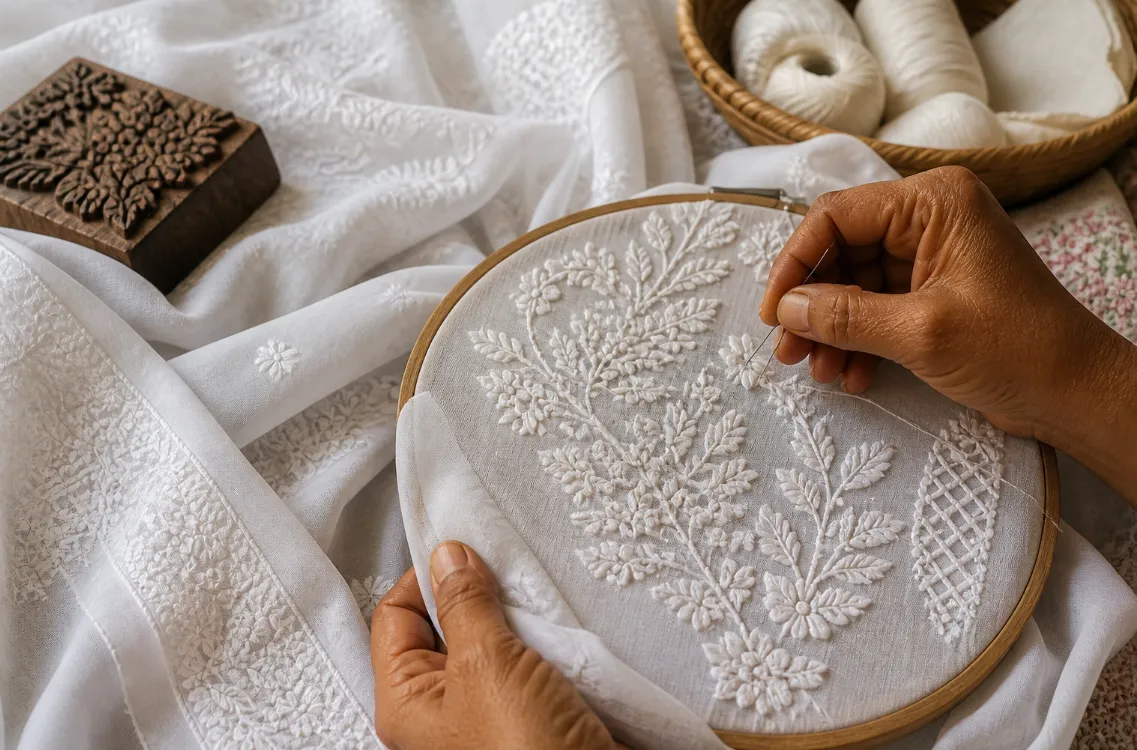
The first and most important sign of authentic Chikankari is the stitching itself.
Handcrafted Chikan uses traditional stitches such as:
-
Bakhiya,
-
Murri,
-
Phanda,
-
Jaali,
-
Tepchi,
-
Hool,
-
and Ghaas Patti.
These stitches create:
-
softness,
-
texture,
-
depth,
-
and subtle variation.
Machine embroidery usually appears:
-
overly perfect,
-
overly uniform,
-
and flat.
Authentic hand embroidery has a natural human character that machines cannot fully imitate.
2. Check the Back Side of the Fabric
One of the easiest ways to identify handcrafted Chikankari is by examining the reverse side of the garment.
In Handcrafted Chikan:
-
the back side may show loose thread movement,
-
natural stitch variations,
-
and intricate handwork details.
In Machine Embroidery:
-
the back often looks excessively neat,
-
tightly structured,
-
or covered with stiff backing material.
Authentic hand embroidery should feel softer and more organic.
3. Understand Bakhiya (Shadow Work)
Bakhiya is one of the signature stitches of Lucknowi Chikankari.
In authentic handcrafted Bakhiya:
-
embroidery is often worked from the reverse side,
-
creating a soft shadow effect on the front.
This delicate shadow-like appearance is extremely difficult for machines to replicate naturally.
Premium handcrafted garments at Tehzeeb often showcase refined shadow work that reflects traditional Lucknowi artistry.
4. Observe the Texture and Feel
True handcrafted Chikan feels different.
Because the embroidery is done carefully by hand:
-
the fabric remains breathable,
-
lightweight,
-
and fluid.
Machine embroidery often feels:
-
heavier,
-
stiffer,
-
or overly dense.
Authentic Chikankari should never feel harsh or rigid.
The elegance of Chikan lies in softness and subtlety.
5. Look for Slight Natural Variations
One of the greatest signs of genuine hand embroidery is that no two pieces are ever completely identical.
Tiny variations in:
-
stitch spacing,
-
thread flow,
-
or motif detailing
are completely natural in handcrafted work.
These variations are not flaws.
They are proof that the garment was embroidered by human hands rather than mass-produced by machines.
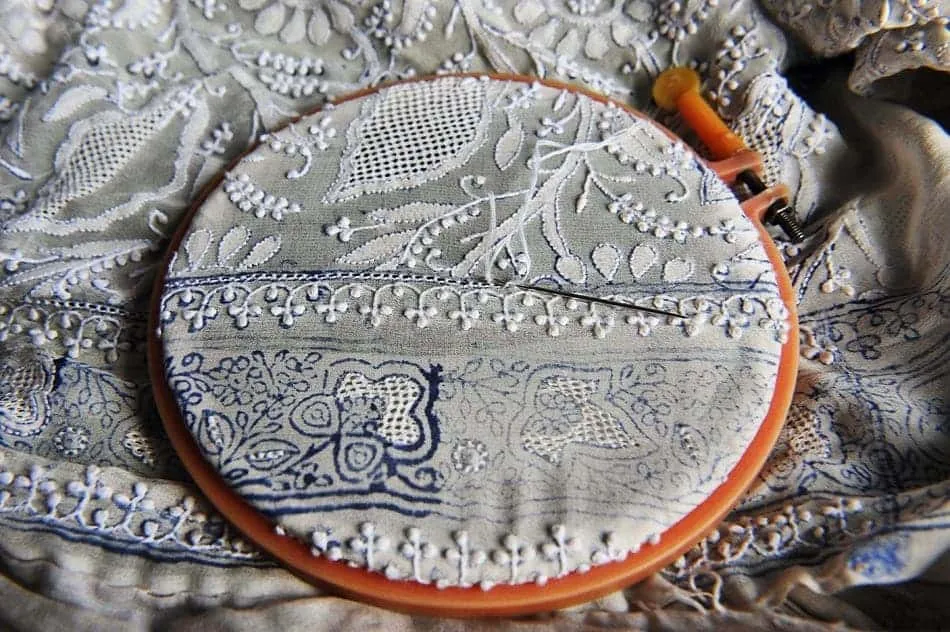
6. Examine Jaali Work Carefully
Jaali is among the most difficult and prestigious Chikankari techniques.
In authentic Jaali:
-
artisans carefully separate fabric threads,
-
creating delicate net-like patterns without cutting the fabric.
Machine-made Jaali often appears:
-
punched,
-
artificial,
-
or overly symmetrical.
True Jaali feels soft, integrated, and incredibly refined.
7. Pay Attention to the Overall Elegance
Authentic Lucknowi Chikan is known for understated luxury.
Premium handcrafted Chikankari usually reflects:
-
graceful spacing,
-
balanced motifs,
-
fine detailing,
-
and elegant restraint.
Machine-made garments often appear:
-
overcrowded,
-
repetitive,
-
or visually heavy.
True Chikankari never needs excessive decoration to appear luxurious.
8. Know the Value of Time and Craftsmanship
Handcrafted Chikankari takes time.
Depending on the complexity, a single garment may require:
-
days,
-
weeks,
-
or even months
to complete.
This is why authentic handcrafted Chikan naturally costs more than machine embroidery.
When purchasing genuine Chikankari, you are paying not only for fabric — but for:
-
artistry,
-
heritage,
-
patience,
-
and artisan skill.
Why Authentic Chikankari Matters
Choosing handcrafted Chikan helps preserve one of India’s most treasured textile traditions.
It supports:
-
artisan communities,
-
traditional craftsmanship,
-
and centuries-old embroidery techniques.
At Tehzeeb, authentic hand embroidery continues to remain at the heart of every collection — combining timeless Lucknowi craftsmanship with refined contemporary elegance.
Common Signs of Machine-Made Chikankari
Here are some common indicators of machine embroidery:
-
Excessively perfect repetition
-
Thick or stiff embroidery
-
Lack of depth and softness
-
Flat stitching appearance
-
Heavy backing material
-
Artificial “Jaali” effects
-
Mass-produced visual feel
Learning these differences helps customers make informed and meaningful purchases.
The Beauty of Genuine Handcrafted Chikan
Authentic Lucknowi Chikankari is more than fashion.
It is:
-
heritage preserved by hand,
-
artistry shaped through generations,
-
and elegance created slowly with patience and skill.
When you wear genuine handcrafted Chikan, you wear a living tradition — one that continues to survive through artisans and heritage brands like Tehzeeb.