How Authentic Chikankari Is Made by Hand
Inside the Timeless Craftsmanship of Lucknowi Chikan
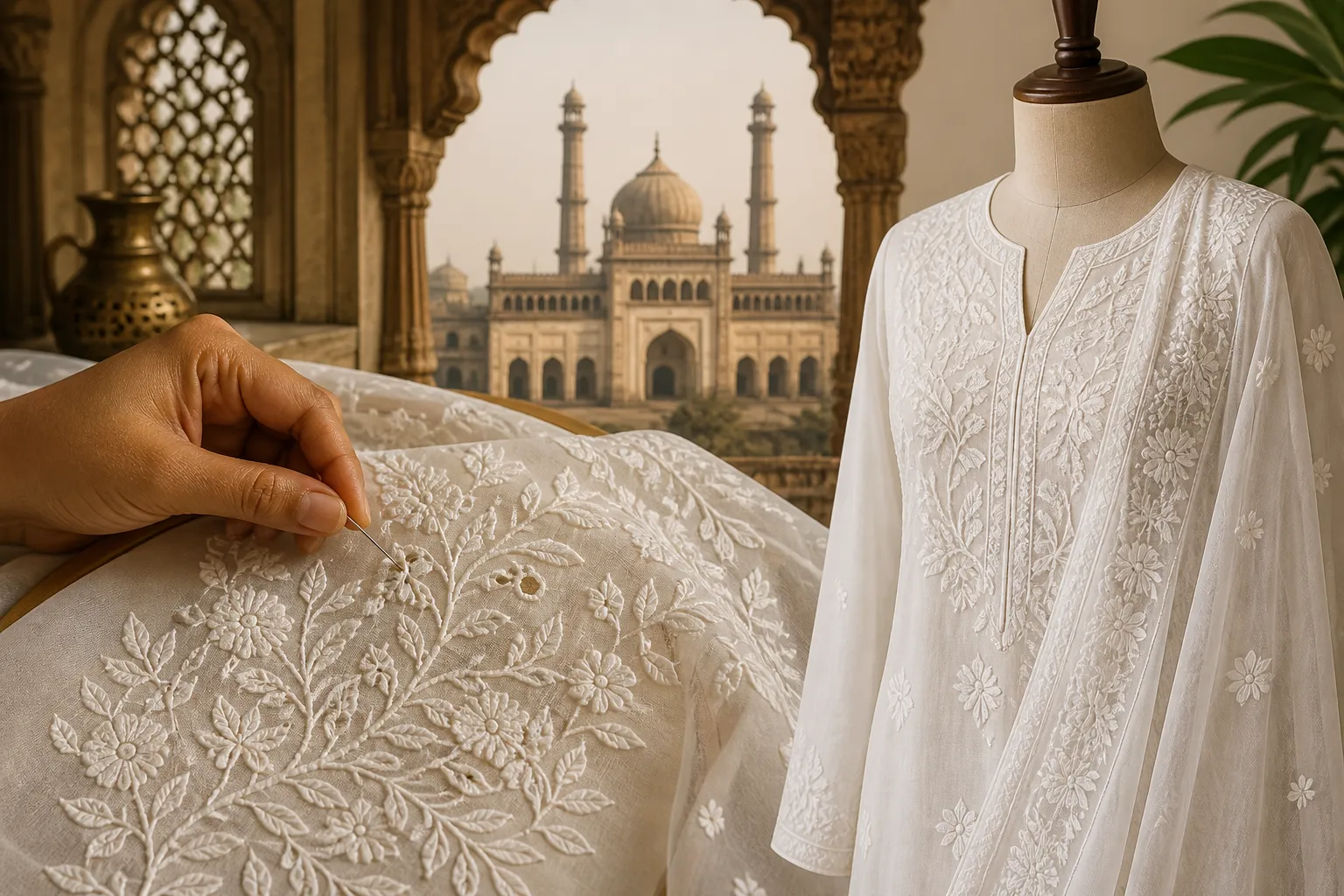
Authentic Lucknowi Chikankari is more than embroidery — it is a slow, intricate art form preserved through generations of skilled artisans.
Every handcrafted Chikan garment carries countless hours of patience, precision, and human craftsmanship. Unlike machine embroidery, true Chikankari cannot be rushed. It is created step by step, by hand, through a process that has remained largely unchanged for centuries.
At Tehzeeb, this tradition has been preserved since 1962 through handcrafted collections created by experienced artisans from Lucknow.
But how exactly is authentic Chikankari made?
Let us explore the journey behind a genuine handcrafted Lucknowi Chikan garment.
Step 1: Designing the Pattern
Every Chikankari garment begins with a design.
Traditional motifs are often inspired by:
-
Mughal floral art,
-
nature,
-
vines,
-
paisleys,
-
jaali patterns,
-
and delicate botanical forms.
Designers carefully create layouts that balance elegance, spacing, and embroidery density.
Premium handcrafted Chikan is known for its subtle sophistication — never overcrowded, never excessive.
At Tehzeeb, traditional motifs are often blended with modern silhouettes and contemporary styling to create timeless yet wearable designs.
Step 2: Block Printing the Design
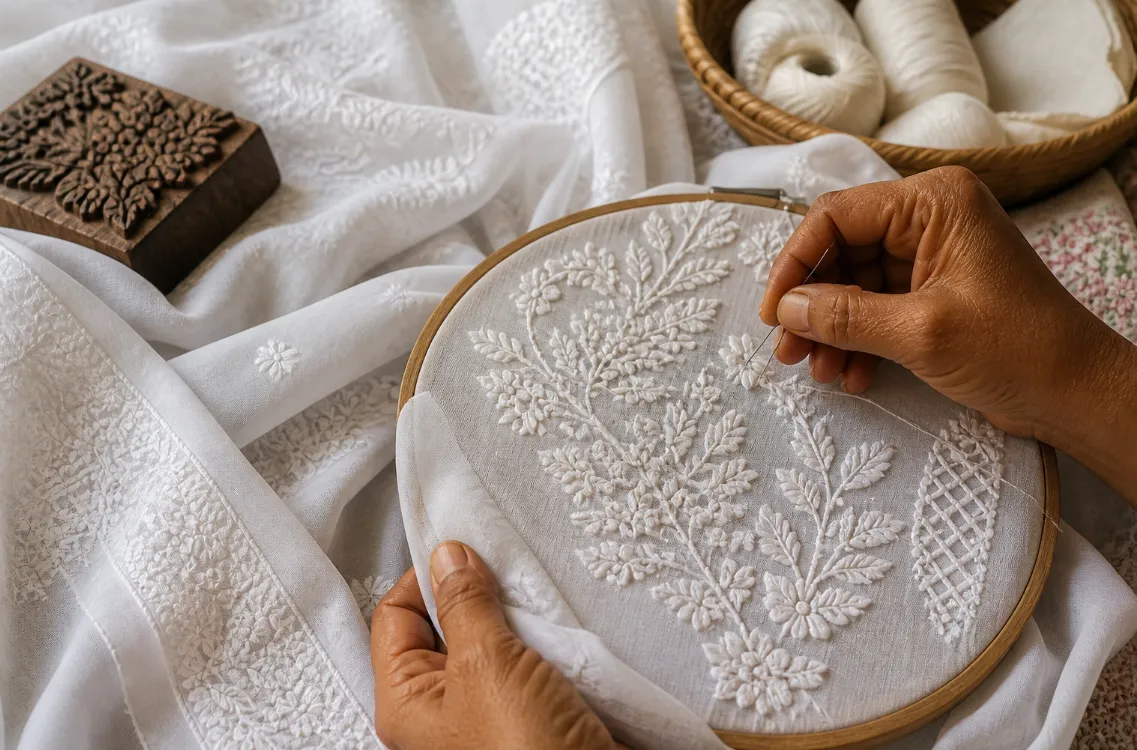
Once the design is finalized, it is transferred onto the fabric using hand-carved wooden blocks.
The blocks are dipped into a washable tracing solution and stamped carefully onto the fabric surface.
This printed outline acts as a guide for the artisans during embroidery.
This stage requires remarkable accuracy because even slight misalignment can affect the final embroidery flow.
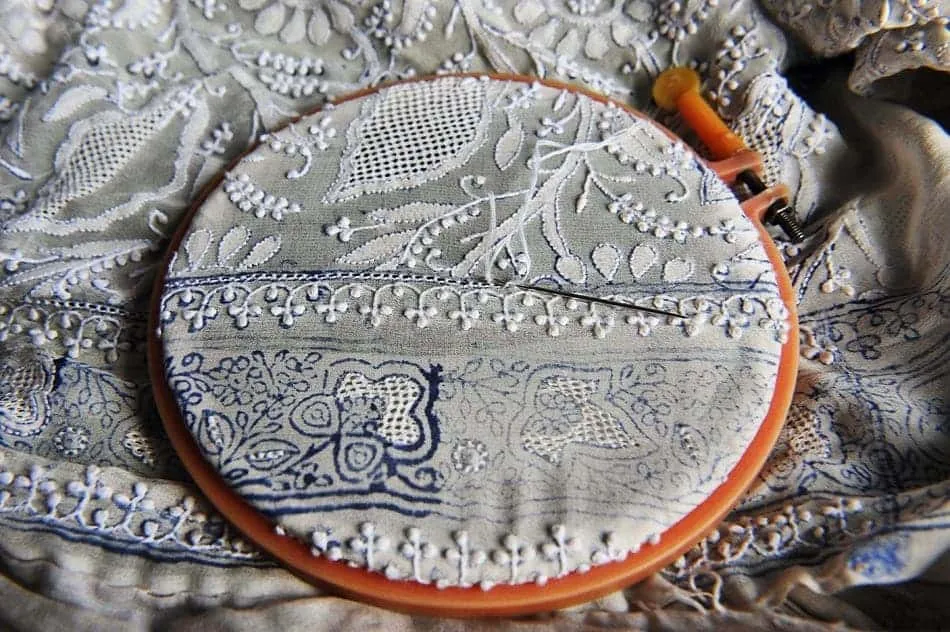
Step 3: Hand Embroidery Begins
This is where the true artistry of Chikankari comes alive.
Skilled artisans embroider the design entirely by hand using needle and thread. Depending on the complexity, multiple artisans may work on different sections of the garment.
Some of the most important traditional stitches include:
-
Bakhiya (shadow work)
-
Phanda
-
Murri
-
Tepchi
-
Ghaas Patti
-
Jaali
-
Hool
-
Keel Kangan
Each stitch creates a unique texture and visual effect.
Some stitches create soft shadows.
Some create raised surfaces.
Some create transparent net-like effects.
Others add floral depth and delicate detailing.
A single premium garment may combine several stitches together.
The Extraordinary Skill Behind Chikankari
Authentic Chikankari is not simply sewing.
It is highly specialized craftsmanship that may take years to master.
Certain stitches such as:
-
Murri,
-
Jaali,
-
and Ulti Bakhiya
require exceptional precision and hand control.
Many artisans learn these techniques within family lineages where the craft is passed from generation to generation.
This human expertise is what gives handcrafted Chikankari its soul and uniqueness.
Step 4: Washing the Fabric
After embroidery is completed, the garment is carefully washed to remove the tracing prints and excess starch.
This stage reveals the softness and elegance of the embroidery more clearly.
The fabric becomes lighter, more fluid, and naturally graceful.
Step 5: Finishing and Quality Checking
The final garment is then:
-
trimmed,
-
ironed,
-
finished,
-
and quality checked.
Premium handcrafted Chikankari requires careful inspection because the beauty lies in the details:
-
stitch consistency,
-
fabric flow,
-
symmetry,
-
and finishing quality.
At Tehzeeb, preserving handcrafted quality and elegance remains central to every collection.
Why Authentic Chikankari Takes Time
One of the biggest differences between machine embroidery and handcrafted Chikankari is time.
Machine embroidery may be completed within hours.
Authentic Chikan may take:
-
several days,
-
several weeks,
-
or even months.
Especially when intricate stitches like Jaali or Murri are involved.
This slower process is precisely what creates the beauty, softness, and individuality of handcrafted embroidery.
No two hand-embroidered garments are ever completely identical.
And that is the beauty of handmade art.
Handcrafted vs Machine-Made Chikankari
Today, many garments imitate Chikankari through machine embroidery.
While machines may copy patterns, they cannot recreate:
-
the softness of Bakhiya,
-
the texture of Murri,
-
the delicacy of Jaali,
-
or the emotional value of hand craftsmanship.
Authentic handcrafted Chikan always carries:
-
slight natural variations,
-
depth,
-
artistry,
-
and human touch.
This is what makes genuine Lucknowi Chikan timeless.
Why Handcrafted Chikankari Still Matters
In a world driven by speed and mass production, handcrafted Chikankari represents something increasingly rare:
patience, heritage, artistry, and cultural preservation.
Every handcrafted garment supports artisan communities and helps preserve centuries-old embroidery traditions.
At Tehzeeb, this legacy continues through collections that honor authentic craftsmanship while bringing timeless Lucknowi elegance into the modern wardrobe.
The Beauty of Handmade Heritage
Authentic Chikankari is not merely fashion.
It is heritage stitched by hand.
It is craftsmanship shaped through generations.
It is elegance created slowly and thoughtfully.
And that is why true handcrafted Lucknowi Chikan continues to remain one of India’s most treasured textile traditions.